BUYING GUIDES / USED BULLDOZER
Used Bulldozer Buying Guide: Inspect the Machine Before You Buy
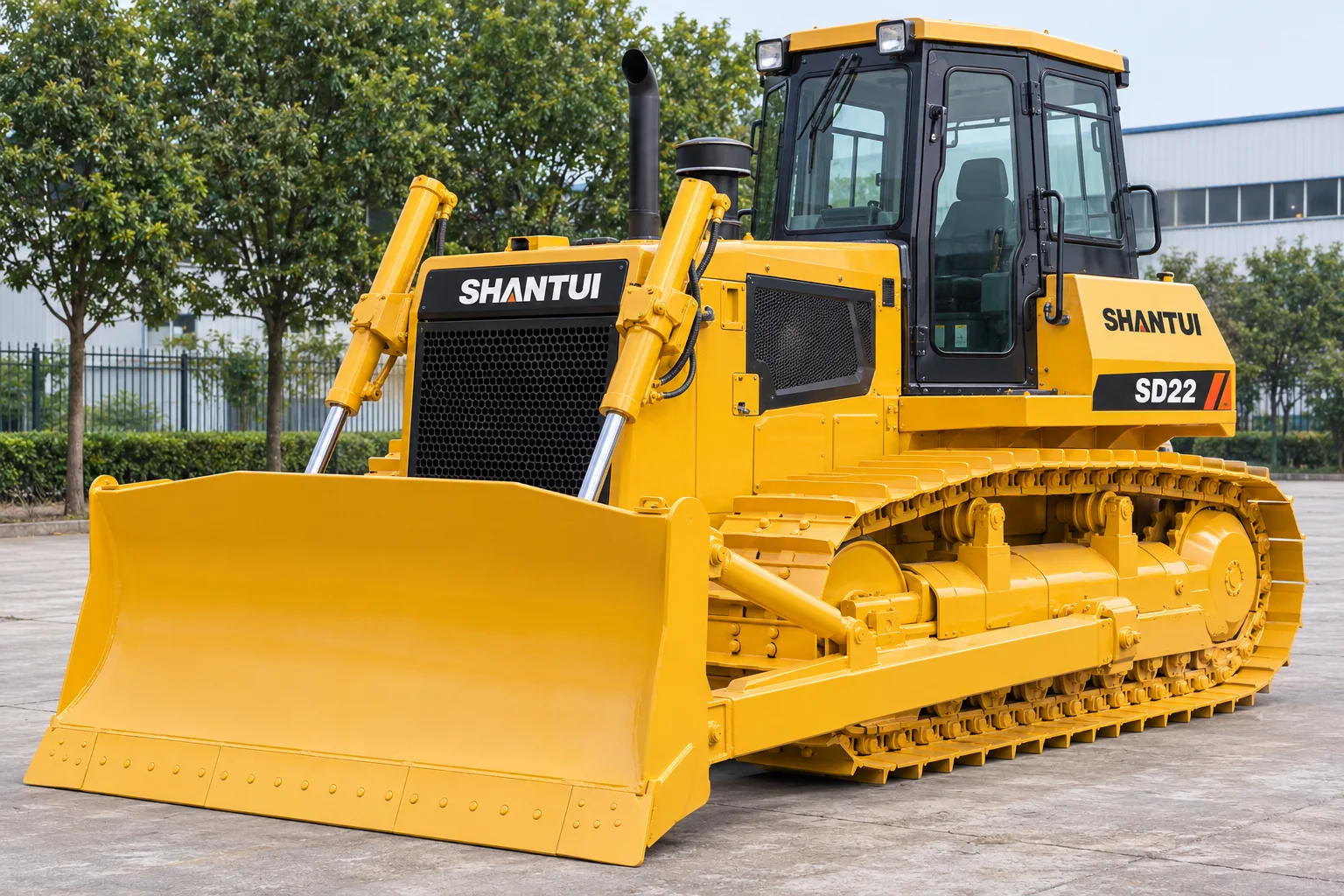
Illustrative image of a Shantui SD22 in clean, well-maintained condition. It does not represent a verified available unit or certify its condition.
A low asking price can be tempting, especially on an auction listing. But a bulldozer can start and move while still needing expensive work. Before comparing prices, identify the exact machine, inspect the undercarriage and test it under suitable operating conditions. This used bulldozer checklist helps you ask for evidence before committing.
1. Confirm the exact dozer and its work history
Record the make, model, serial number, configuration and displayed operating hours. Ask for a clear photo of the serial plate and a cold-start video that shows the hour meter. Compare the meter with available service records and older inspection documents. A meter reading is one data point, not proof of overall condition.
Match the machine to the job as well. Blade type, track shoe width, ripper configuration and operating weight affect suitability, transport and cost. Confirm these details for the specific unit rather than relying on a generic model description.
2. Inspect the undercarriage closely
Track and undercarriage wear can have a major effect on the ownership budget. Request close, well-lit photos of both sides: track links and pins, shoes, rollers, idlers, sprockets and the tensioning system. Look for uneven wear, damaged shoes, missing hardware, oil leaks and mismatched components. Measure wear where possible and compare the findings with the manufacturer’s inspection procedure.
Ask the seller to explain recent undercarriage repairs and provide invoices or inspection measurements when available. A fresh coat of paint or a clean exterior cannot establish remaining service life. Have a qualified heavy-equipment technician inspect it in person when the purchase value or uncertainty warrants it.
3. Test the engine, steering and final drives
When practical, observe a cold start before the machine has been warmed up. Note starting behavior, smoke, unusual noise, warning lights and fluid leaks. Then operate the dozer long enough to check steering response, forward and reverse travel, turning behavior and blade functions. Abnormal pulling, sluggish response, overheating or unusual noise needs a technician’s diagnosis.
Inspect the blade, cutting edge, push arms, cylinders, pins and frame for cracks, bends, loose connections or undocumented weld repairs. Ask for operating video from more than one angle and a written list of known issues. A brief idle video alone cannot show how a bulldozer performs under load.
4. Treat auction listings as a starting point
Auction equipment may be a good fit for a buyer who can assess the risks, but photos and “runs” descriptions leave important questions open. Read the condition report carefully, check what the sale terms exclude, and arrange an independent inspection before bidding when the rules allow. Do not assume a machine is healthy because it drove onto a trailer.
Set a maximum bid using the machine’s documented condition and comparable listings. Add a reserve for repairs and contingencies before the auction, not after. If inspection access is restricted, price that uncertainty into your decision or walk away.
5. Calculate the full cost of buying a used bulldozer
Compare the purchase price with inspection, immediate repairs, inland transport, loading, freight and destination charges that apply to your route. Heavy dozers can require specialized transport, so confirm dimensions, operating weight, loading arrangements and shipping assumptions before treating a quote as complete.
Ask every seller for the same information: exact unit identity, current photos, operating evidence, condition findings, included configuration and a clear breakdown of costs. That makes a used bulldozer comparison more useful than comparing headline prices alone.
Before you shortlist a machine
- Confirm model, serial number, configuration and hour-meter evidence.
- Get detailed undercarriage photos and measurements, if available.
- Request cold-start and operating videos, including steering and blade functions.
- Ask about repairs, leaks, warning lights and known defects.
- Arrange an independent inspection when the risk or purchase value justifies it.
- Estimate repair, loading, inland transport and destination costs before bidding.
Frequently Asked Questions
What should I inspect first on a used bulldozer?
Start with the machine identity and undercarriage. Check both sides of the tracks, rollers, idlers, sprockets and shoes, then review service evidence and arrange an operating inspection.
Are auction bulldozers a good buy?
They can suit buyers who can assess condition and sale terms. Inspect the machine or hire a qualified technician when possible, review the condition report and include possible repairs and transport in your maximum bid.
How can I verify used bulldozer hours?
Ask for a clear hour-meter photo or video and compare the reading with service records, invoices and prior inspection documents. The meter should be considered alongside the machine’s physical condition.
How much does undercarriage condition matter?
It can materially change near-term ownership cost. Obtain wear measurements where possible and have them assessed using the correct inspection procedure for the machine.
What costs should I include when buying a used bulldozer?
Include inspection, expected repairs, inland movement, loading and shipping or destination charges relevant to the route. Confirm which items are included in each quotation.
Can I judge a bulldozer from photos alone?
Photos help identify visible damage and wear, but they cannot confirm internal condition or performance. Request operating evidence and arrange an independent inspection when possible.
View the used Shantui SD22 listing → · View the used CAT D6G listing →