BUYING GUIDES · COMPACT EQUIPMENT
Used Mini Excavator for Property Maintenance: How to Choose the Right Size
A compact excavator can help with drainage, trenching, fence work, landscaping and small construction projects. The right used mini excavator depends less on a single tonnage label and more on access, digging depth, ground conditions, attachment needs, transport limits and how often it will work.
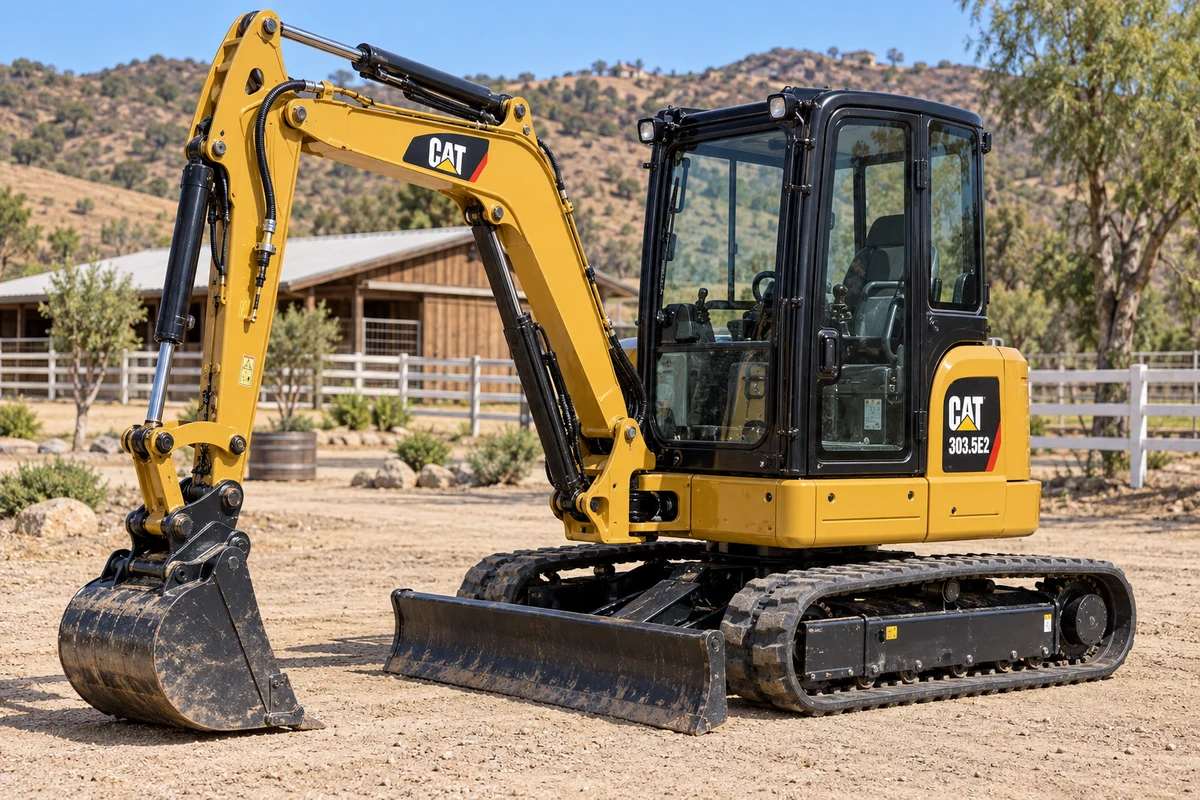
Illustrative image only; it does not depict a specific available unit or verify its condition.
Start with the jobs you will actually do
Write down the recurring tasks before comparing machines: trench length and depth, drainage work, stump or brush removal, material handling, grading and access around buildings or fences. Estimate how often each task comes up. Occasional property maintenance may not justify the same machine size or ownership cost as daily commercial work.
Think through the tightest gate, narrowest path and softest ground the excavator must cross. Compare the machine’s documented width, operating weight, tail swing and transport dimensions with the site. Verify the exact configuration, including blade, boom and track setup, because dimensions and capabilities can vary.
Choose capacity from reach and access, not the label alone
Use the specifications for the exact model to check digging depth, reach, dump height, lifting limits and operating weight. Match these to the deepest trench, farthest working point and materials you need to move. A larger class may add reach or capacity, but it can also be harder to transport and maneuver. A smaller machine may fit narrow areas but take longer or fall short of the required depth.
Do not compare machines using tonnage alone. Ask a dealer or qualified operator to help validate the configuration against your site plan and attachments. Never exceed the manufacturer’s lifting chart or operate near edges and slopes without considering the published limits and site conditions.
Decide which comfort features are necessary
For hot, dusty or rainy conditions, cab enclosure and air conditioning may be important. Compare visibility, entry, controls, seat, ventilation, heating and cooling on the actual machine. If the excavator will only run occasionally, consider whether the added cost of a particular cab or option is worth it for your expected hours and climate.
Arrange a demonstration if possible. Controls that feel familiar and comfortable can matter during repeated trenching or grading, especially when several operators may use the machine.
Check attachment compatibility before choosing
List the attachments you plan to use, such as a trenching bucket, grading bucket, thumb, auger or hydraulic breaker. Confirm the coupler type, pin dimensions, auxiliary hydraulic flow and pressure, return-line requirements, electrical connections and machine capacity for each attachment. “Fits this size excavator” is not enough: compatibility must be checked against the specific machine and attachment documentation.
Ask what attachments are included in the quoted unit and whether they are shown in current photos. If an attachment is essential to your work, include its purchase, inspection and transport costs when comparing options.
Compare new, financed used and cash used on total cost
A low purchase price does not necessarily make a used excavator the lower-cost choice, and a new machine is not automatically the better value. Compare the same ownership period and include purchase price, financing charges, taxes, inspection, transport, insurance, scheduled maintenance, likely repairs, storage and eventual resale value. Use current written offers for your location; interest rates, taxes and dealer programs change and vary by buyer.
For light use, estimate annual hours realistically and ask what service intervals, calendar-based maintenance and storage preparation still apply. Also consider access to parts and service near your property. A machine that sits for long periods still needs correct maintenance and care.
Inspect the exact used mini excavator
- Match the model and serial or product identification plate to the quotation and available records.
- Review hour-meter history, service records, repairs and disclosed defects together.
- Request a cold start and operating demonstration that covers travel, swing, boom, stick, bucket and auxiliary hydraulics where fitted.
- Have a qualified inspector assess the engine, hydraulic system, cylinders, pins, bushings, frame, welds, tracks, rollers, sprockets and blade.
- Request dated photos, video and written inspection findings for the specific unit.
- Price immediate repairs, missing attachments, loading and delivery before agreeing to the purchase.
Appearance alone cannot verify mechanical condition. Treat terms such as “excellent” or “95% condition” as claims to define and support with evidence, not as inspection results.
Build a practical shortlist
Compare two or three configurations against the same job list. Record access width, target digging depth, annual hours, required attachments, transport plan and local service options. Then compare machine-specific inspection findings and itemized costs. This makes it easier to see whether a particular used mini excavator fits your property rather than buying capacity you will rarely use.
For current availability, ask for unit-specific photos, inspection evidence, included attachments and a destination-port quotation. Confirm the exact machine and all terms in writing before making a payment decision.
Frequently Asked Questions
What size mini excavator is best for a ranch?
There is no universal best size. Match documented digging depth, reach, operating weight, width and lifting limits to the tasks, access routes and ground conditions on your ranch. Verify the exact configuration before buying.
Is a used mini excavator suitable for occasional property work?
It can be, if its capabilities, condition, maintenance needs, storage and total ownership cost fit your expected workload. Estimate annual use realistically and compare that cost with hiring or renting when appropriate.
Should I buy a new mini excavator or a used one?
Compare written purchase and financing offers with the used machine’s inspection results, repair exposure, maintenance, transport, warranty terms and resale assumptions over the same ownership period. Do not rely on headline price alone.
What should I inspect on a used compact excavator?
Verify its identity and records, then arrange an inspection of the engine, hydraulics, structure, pins and bushings, undercarriage, controls and attachments. Request operating evidence and written findings for the exact unit.
How do I check whether an attachment fits a mini excavator?
Confirm coupler and pin dimensions, auxiliary flow and pressure, return-line and electrical requirements, and machine capacity using the documents for both the excavator and attachment.